Wishing Games into Existence
In the past week, my kids and I made six browser games. “Made” overstates our part. They described the games they wanted to play, Claude built them, and they played, complained and asked for changes. I mostly held the keyboard and handled deployment.
The games aren’t groundbreaking, but they’re fun. They’re engaging. And they’re malleable. The kids describe them, play them, decide what to change, and change them. When we install a game from the app store, we’re signing up for manipulation - a sales funnel. Here, they’re a good measure more in charge. Constructing.
What the five have in common is that they’re established genres, with decades of examples behind them: sims, a platformer, an exploration game, a turn-based war game. None of them depends on great graphics. Their difficulty is in rules, layout and behavior, which is where the models are strong.
Astin Restaurant
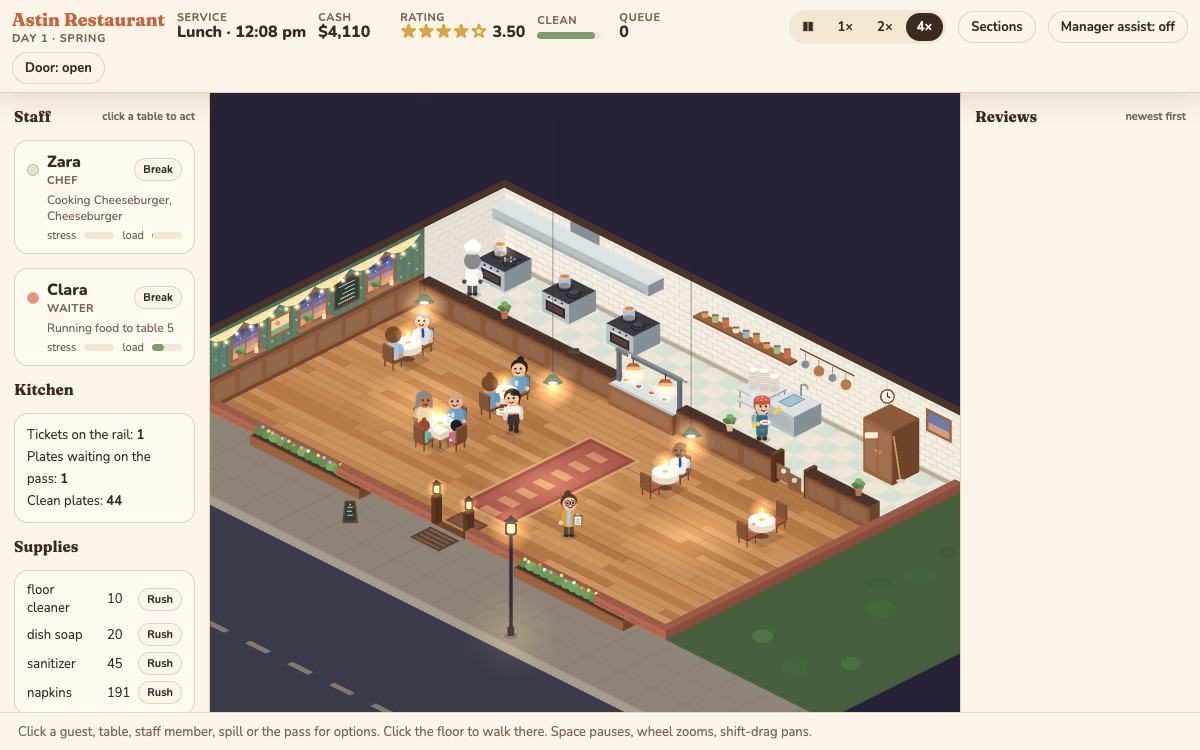
A restaurant sim where every guest, waiter and chef has a mind of their own. You hire staff, divide the floor, set the menu and stock the pantry, then put out fires during service. Reviews are written from what actually happened at the table.
Astin Hotel
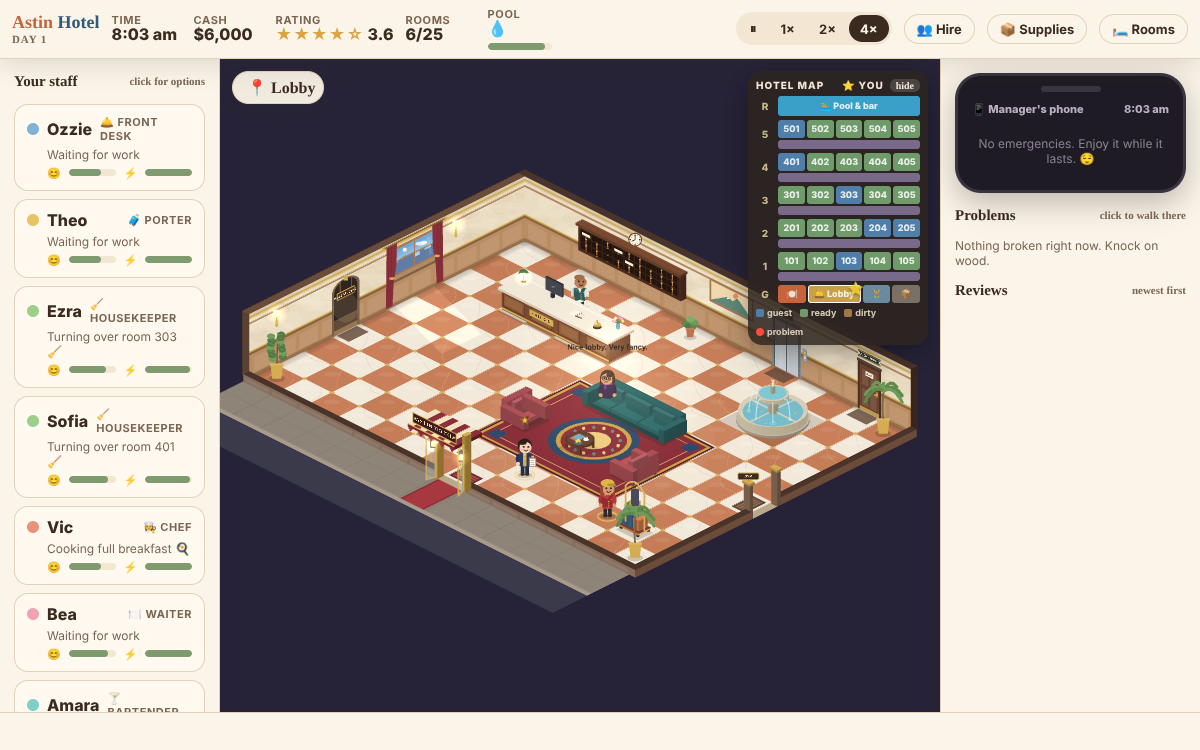
The sequel, a week later. You manage a 25-room hotel with a restaurant, a gym and a rooftop pool, and you walk it yourself, one room at a time. When your phone buzzes, get to the emergency before the timer runs out. A toilet can clog on the third floor while you’re up on the roof.
Ghost Chest Hunter
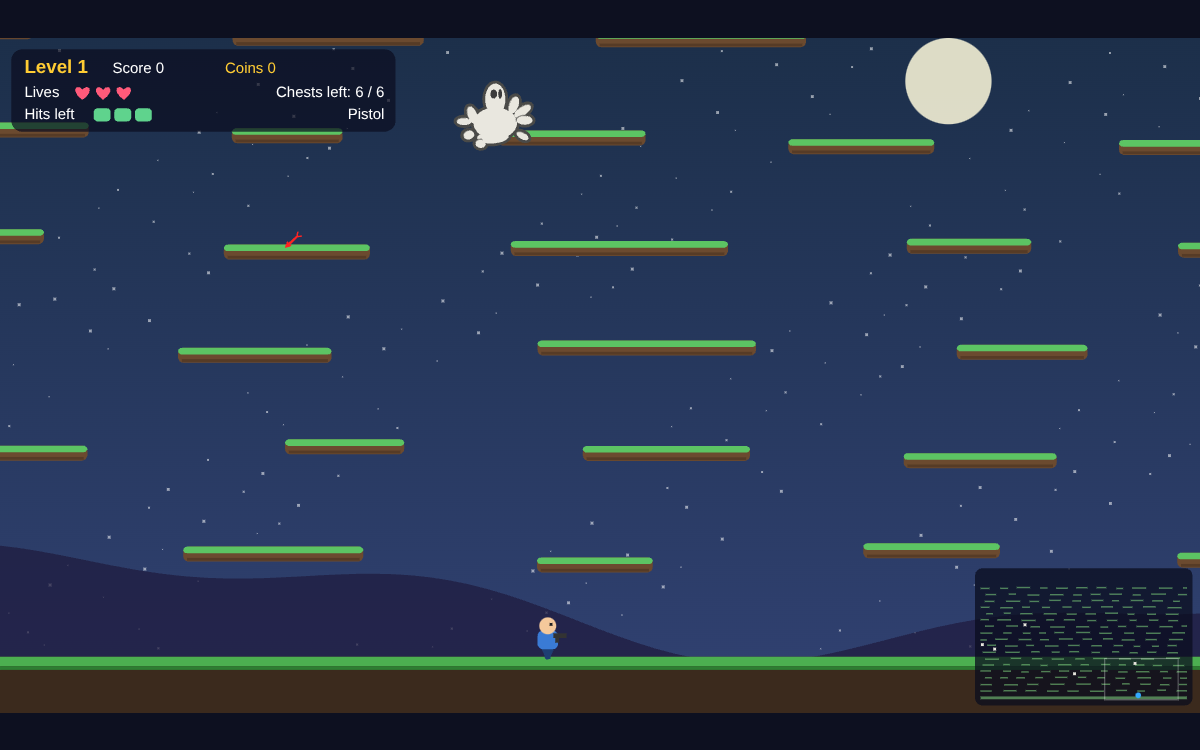
A platformer in a single HTML file. Find the treasure chests, dodge or dart the ghosts, and spend your coins on better gear between levels. It needs a keyboard.
Mulberry
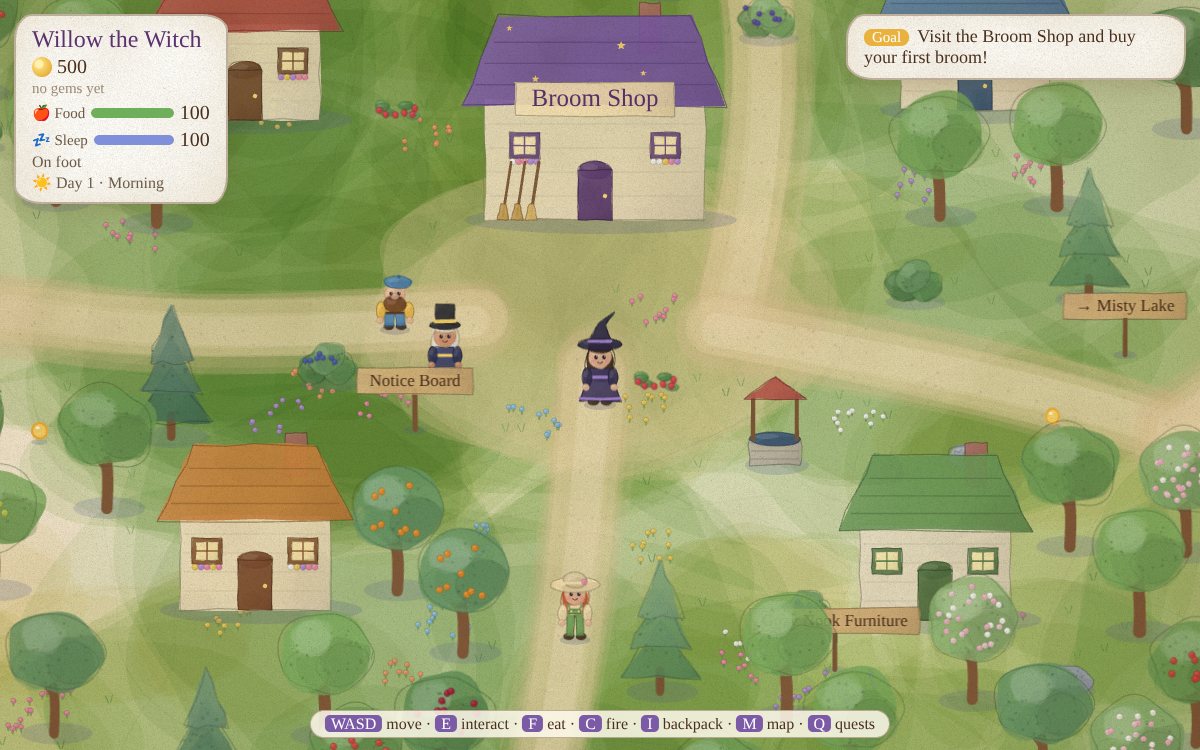
A cozy exploration game painted in watercolor. Pick one of twelve characters (witch, fairy, gnome, merfolk, dragon-kin…), each with a perk, start with 500 coins, buy a broom, and explore a village, a forest, a swamp and a cave system. You get hungry and sleepy, and you have to find somewhere to spend the night. It needs a keyboard.
Sandwich Empire
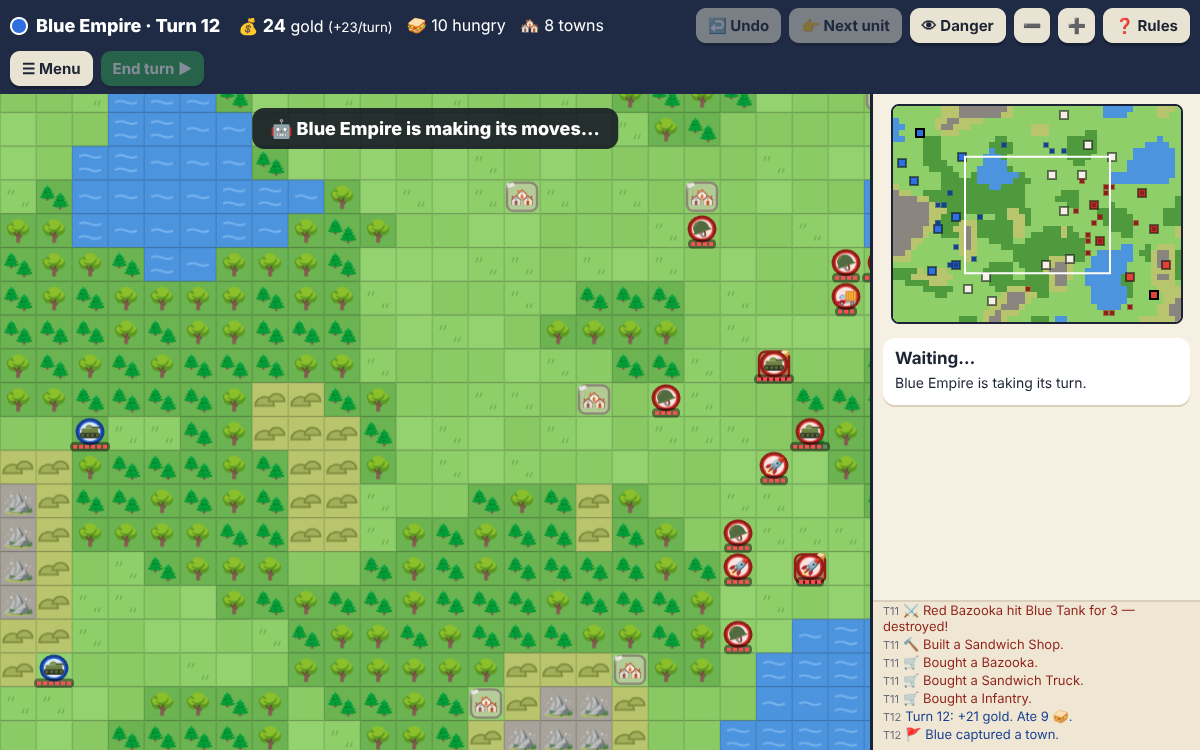
Our 4X game: a turn-based war game for a kid who plays chess. Think Advance Wars meets a tiny Civ. Small whole numbers, no dice, and you see the exact outcome of a fight before you commit to it. From level two, armies far from home have to be fed, which is where the sandwiches come in. Play a person or the computer.
Limits
The only friction was deployment, and there was very little of it. There are Github repos and Cloudflare workers. But once the pattern was set, Claude could follow it. The only thing I still have to do, for whatever reason, is set up a trigger to fire off the worker when Github updates. But Claude can fire that in a pinch.
The sixth game is the one you can’t play. Runway Dreams was meant to be a fashion game: create a model, dress them from a big wardrobe, and watch them walk a runway in fabric that moves like fabric.
It got more engineering than any of the others. Claude wrote a cloth simulator, sixty-one garments cut to the model’s body measurements, ten themed stages and over a thousand tests. When its own procedural bodies weren’t good enough, we brought in an open parametric body model.
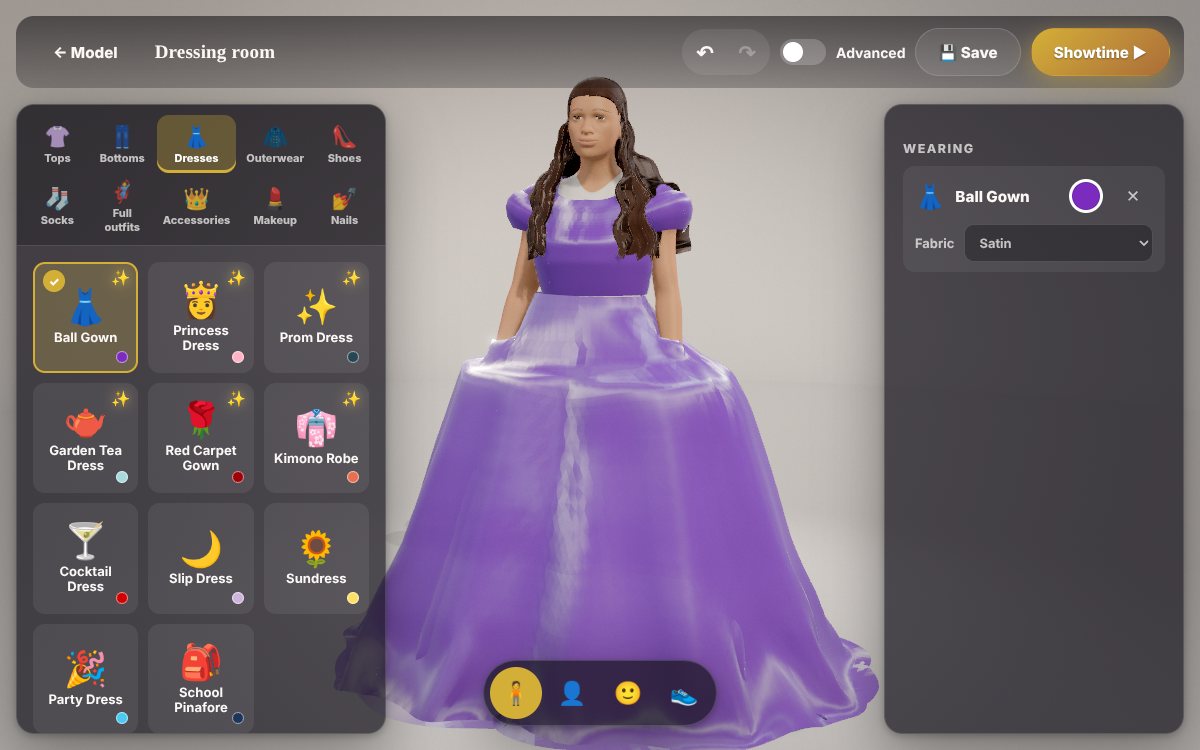
It looked like hell. I put Claude on an iteration loop. It burned some good hours. It still doesn’t look right, and doesn’t appear to be converging. Put some spikes down in other engines. No dice. In a world where the cost of code is dropping toward zero, it’s interesting to find a territory that still provides friction. Three dimensional modeling still puts up a fight. I wonder if this is a problem of sight. The earlier games could be reasoned about pretty well without a screenshot. Variances in graphics didn’t matter all that much. But for this one, every graphic glitch stands out. The loop of image capture to code change is a steep hill, and the sensitivity to error is high. More experiments to come.